RI transfers
- Make sure your cookie has a dry, flat surface. The base layer must be completely dry before applying a transfer on top of it.
- When possible, prepare your transfers ahead of time - it's a considerable time saver. You can enhance them with gold or luster dusts or edible markers prior to placing on the decorated surface. It significantly reduces the risk of unsightly smudges which is a common case when decorating directly on the cookie.
|
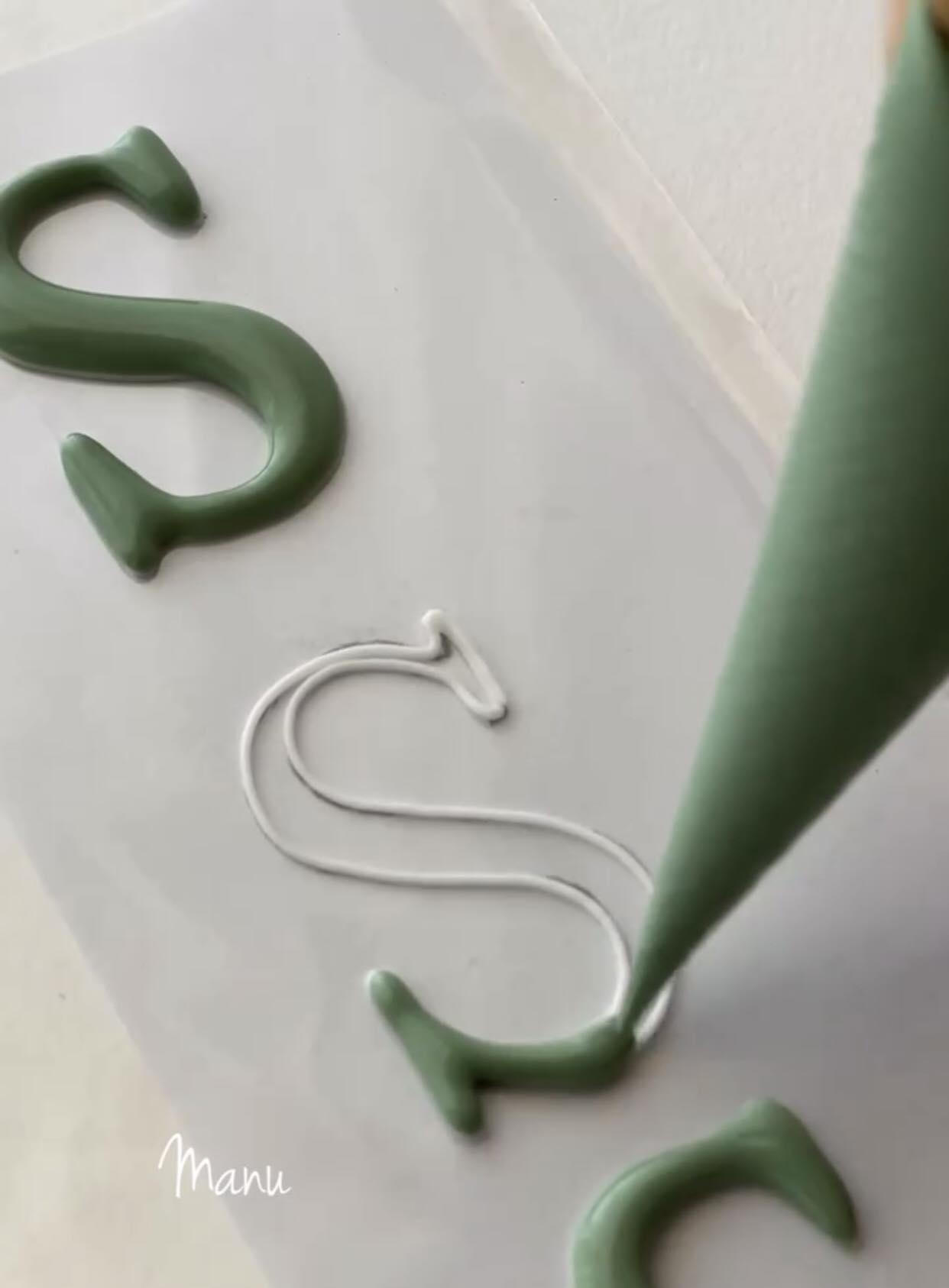
1. Carefully pipe your shape on the acetate sheet or parchment paper (depending on what suits your preferences). Use medium consistency icing; transfers made with icing that is too runny tend to be more fragile when dried. When finished, put your transfer sheet to the dehydrator for half on hour. |
|
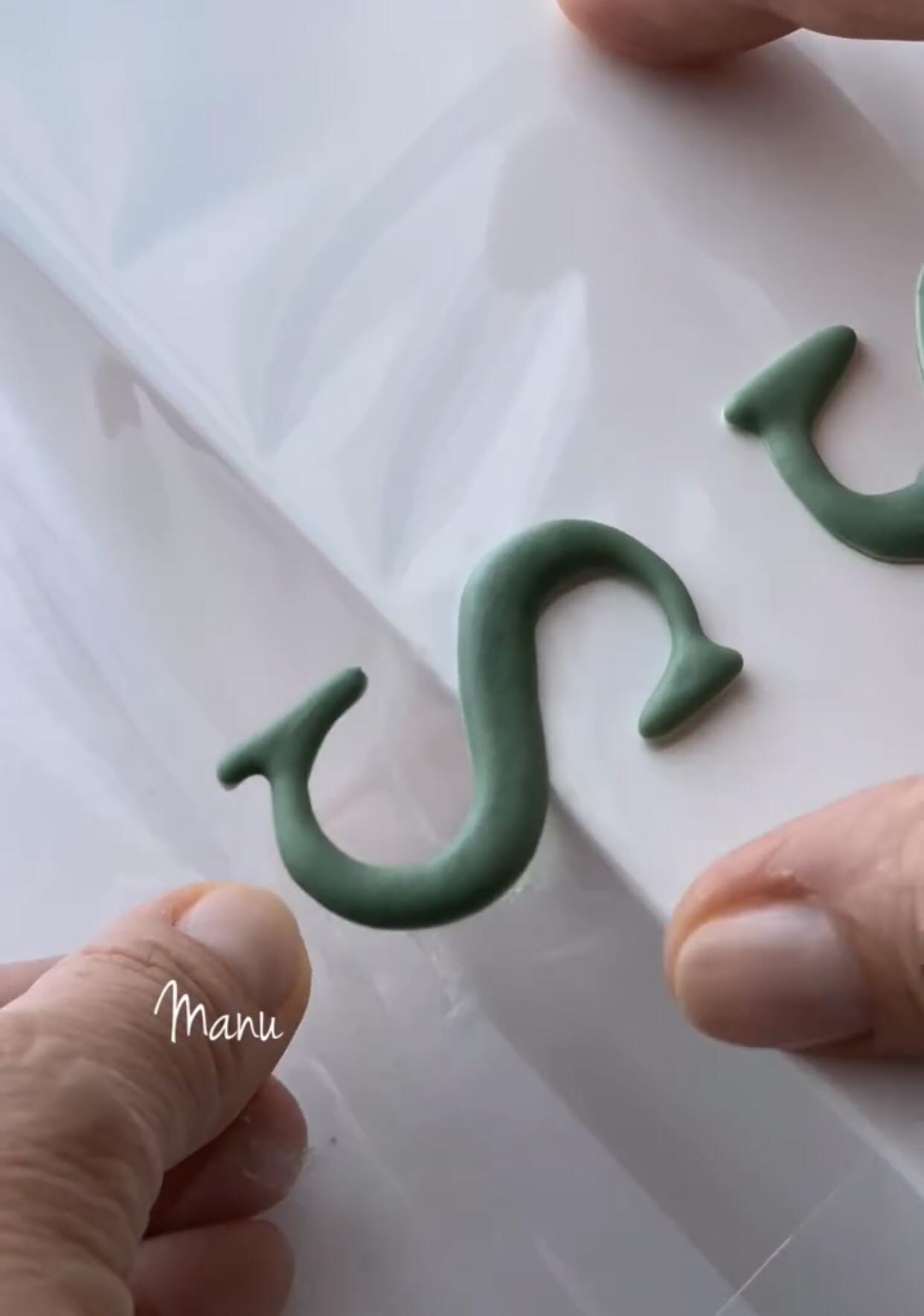
2. When your transfers are completely dry, take the transfer sheet out of the dehydrator. Carefully remove your transfers since dried elements are extremely fragile and break very easily. |
|
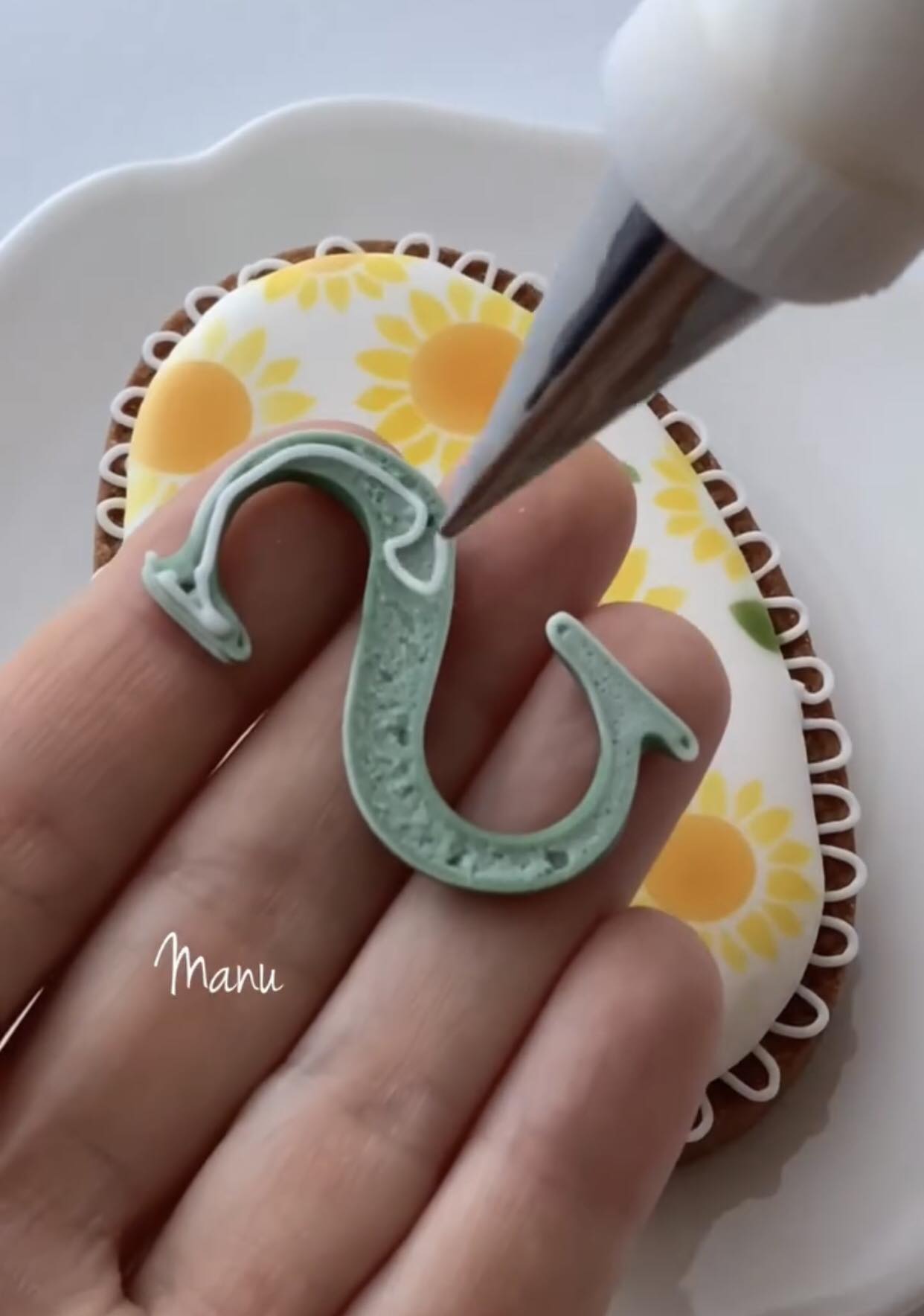
3. Use a little bit of icing on the back of the transfer to glue it onto a surface. If you use too much of icing, the excess will show up at the sides of glued element leading to untidy appearance of your design. |
|
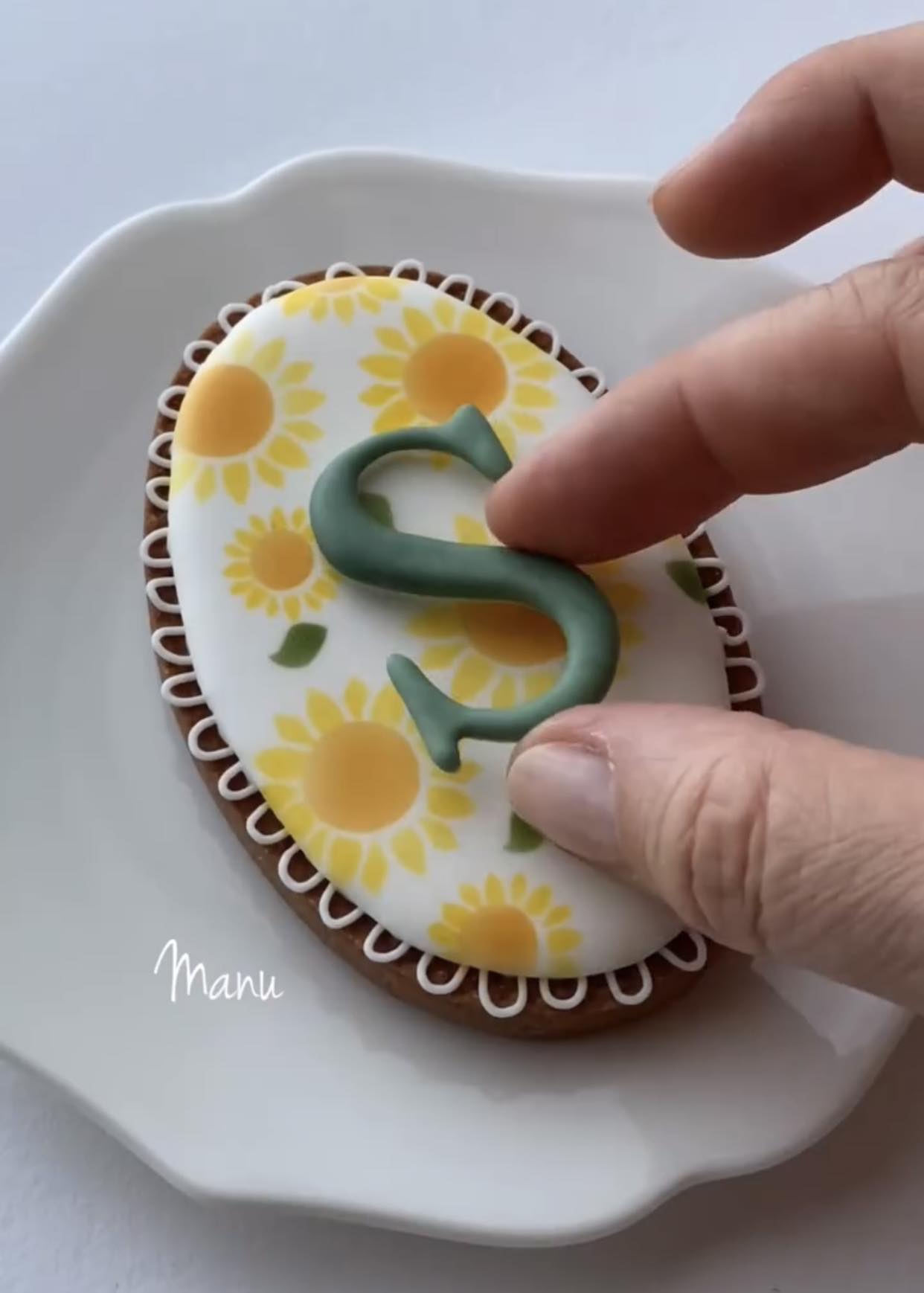
4. Then, gently place your transfer onto a cookie. Be careful not to break it and avoid applying pressure. Use a gentle shifting motion to ensure it lays flat and is flush with the surface. |
The video presenting the entire procedure is available on Manu's Instagram profile.